
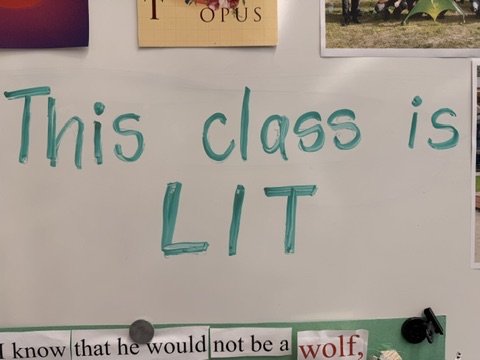
Can’t get enough of English class? Luckily, St. George’s School offers plenty of ways to extend your love for literature beyond the classroom! Whether you’re a reader, aspiring poet, budding journalist, or casual hobbyist, here are four ways to find your voice in our thriving literary community.
1.The OPUS

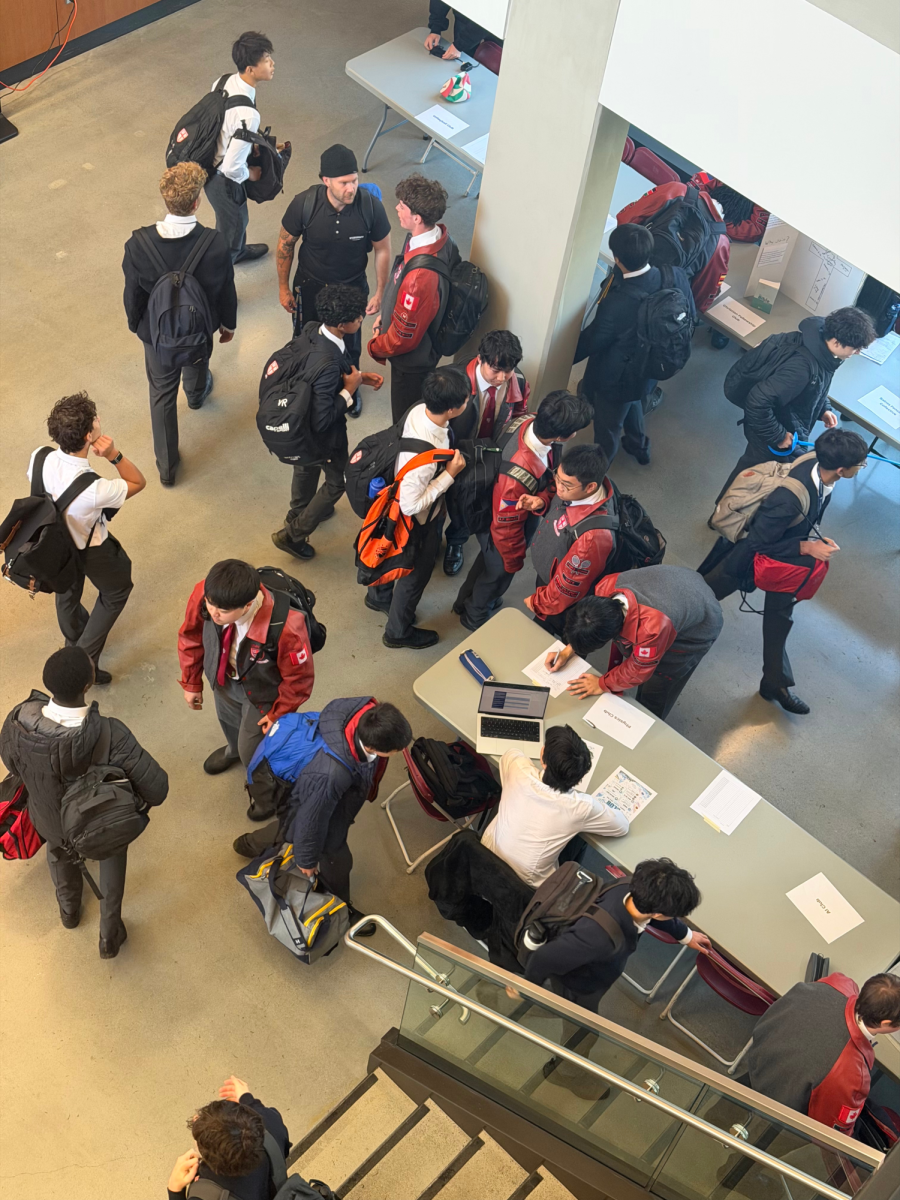
For over two decades, The OPUS has been Saints’ student-led arts and literary publication, showcasing the boundless creativity of our school community. There are two main ways to get involved. First, you can be featured in the annual magazine by submitting a poem or short story you’ve written in class, or perhaps an artwork you’re dying to share. Second, you can drop by a club session for a literary workshop or selections meeting, where students from Grades 8-12 come together to exchange ideas, discover new voices, and feed off one another’s passion for the arts.
2.Book Club
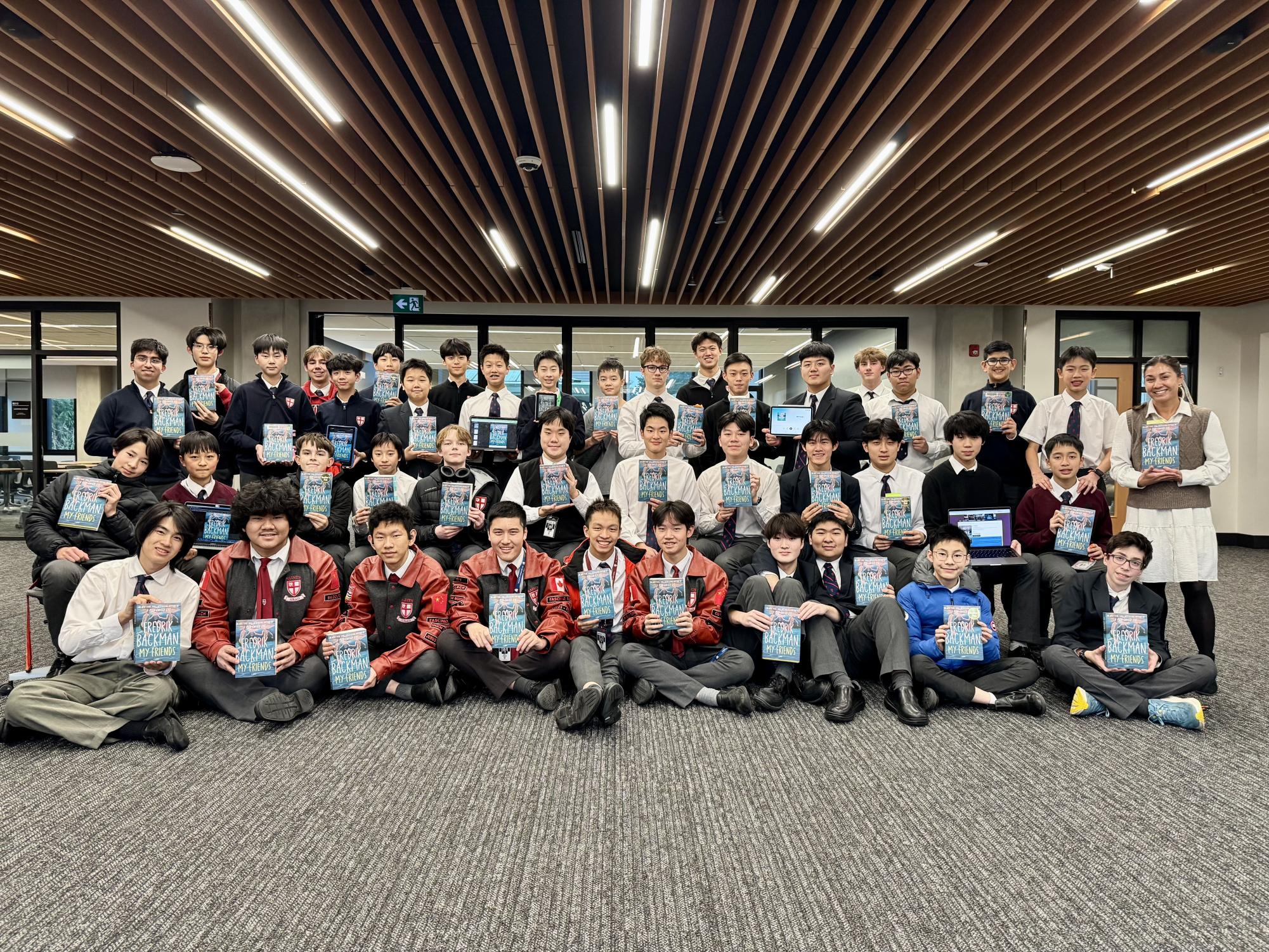
Reading can be a community activity too! Book Club brings Saints students together to devour a contemporary novel and share their love of reading. Every three to four months, English teachers select a book for the season, and readers come together on a Tuesday afternoon to exchange interpretations and argue over motifs while enjoying a good slice of pizza. The next gathering is December 1st in B206 where readers will come together to discuss Exit Party by Emily St. John Mandel. Book Club welcomes lifelong bookworms and people picking up reading for the first time in years. All that matters is that you’re there turning new chapters with everybody else!
3.Poetry in Voice (PIV)
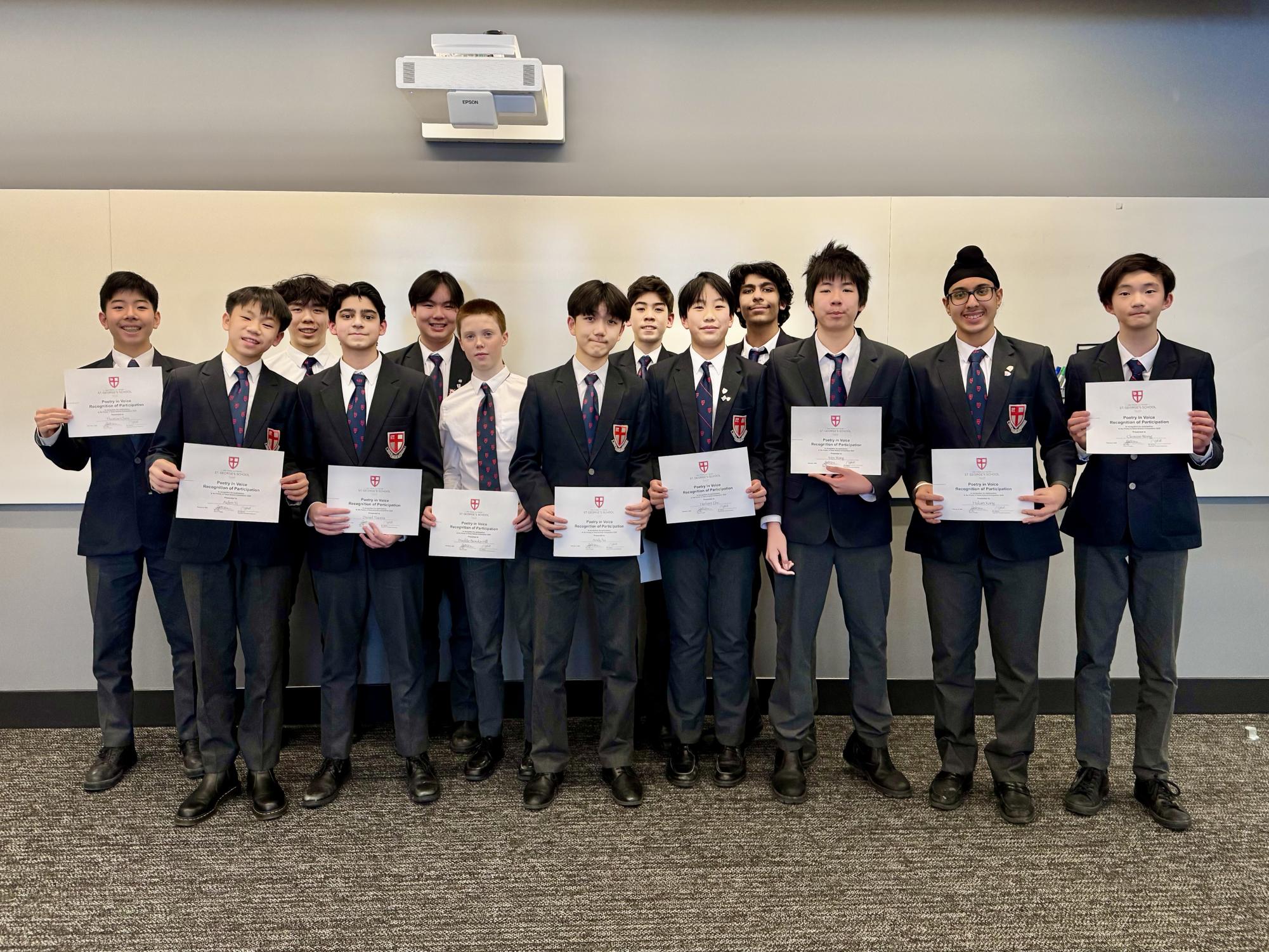
Some poems just leap off the page. The raw emotional tenderness clings to you, whether it be melancholic dread or feverish joy. PIV gives Saints students the opportunity to breathe life into their favourite verses through the art of recitation. Saints students across grades come together to recite poems for one another, ranging from Romantic odes to contemporary sonnets. Readers explore the meaning and emotion behind every line while testing their interpretive and public speaking skills. The poetry night culminates with English teachers crowning a student the grade champion, who will move on to regional reading competitions afterwards. But what’s important isn’t winning the title, because you’re winning just by bringing a poem that speaks to you and sharing it with everyone.
4.Journalism, AP courses, Lit Studies 11 Honours
If you want to take your literary studies a little further in the classroom, Saints has plenty of courses. Aspiring storytellers can try their hand at interviewing and reporting in Journalism 12, uncovering stories around the Saints community through The Echo! Meanwhile, our Honours and AP English courses offer opportunities to wrestle with more challenging texts, dissect literary or rhetorical devices, and debate ideas with classmates who share enthusiasm for the written word.
Why would I ever do any of this?
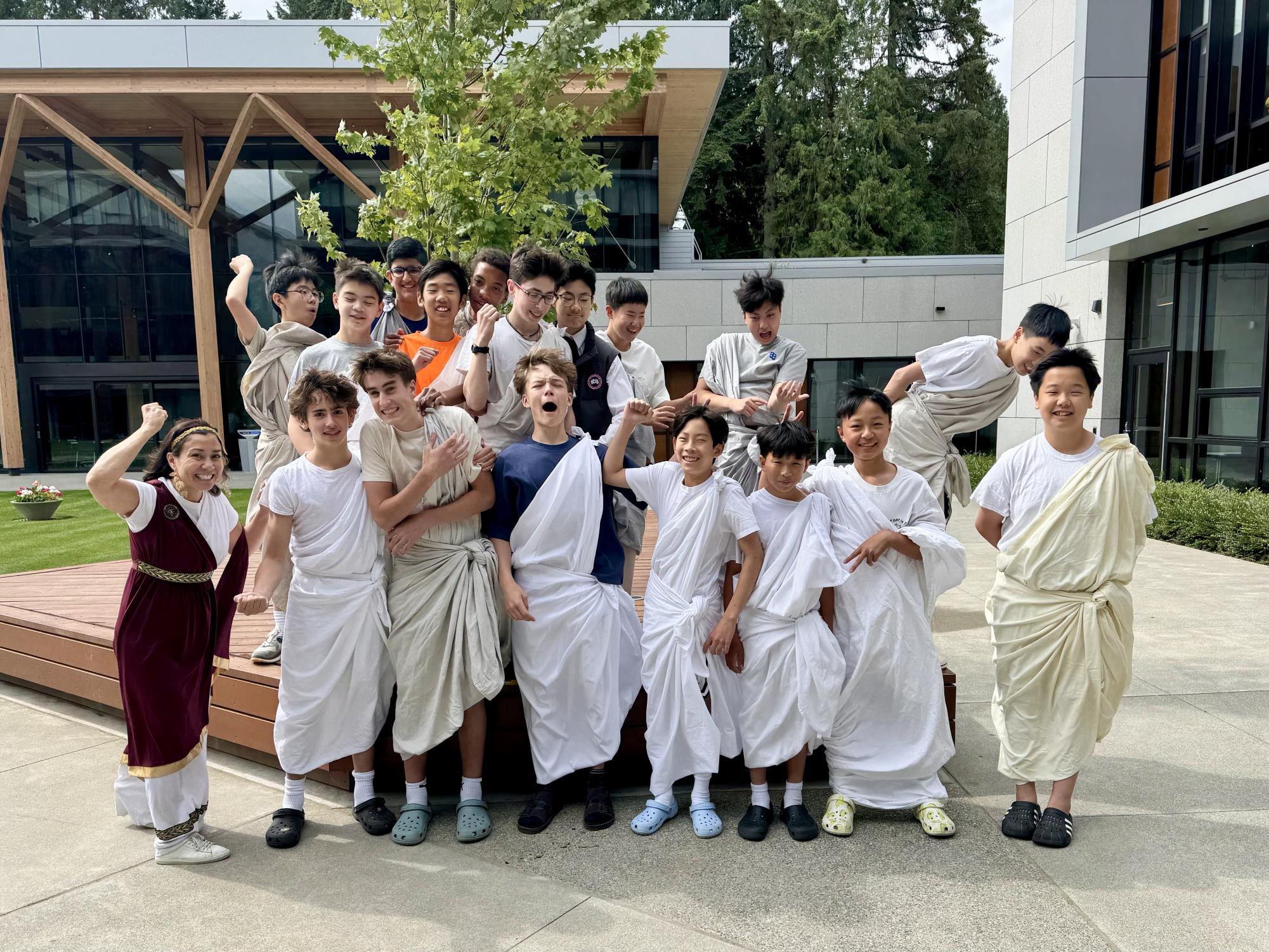
Well, to find out, we sat down with Ms. Gin, who has spent the past 15 years teaching literature at Saints. She’s guided countless students through the Western canon from Beowulf to Paradise Lost to modern poetry. We asked her what the value of reading beyond the provincial curriculum is and why to love literature beyond your assigned texts.

- What makes St. George’s literary community unique?
Boys aren’t typically seen as “readers” in the world today, so I’m always impressed by how many students love reading. Like, love reading. A handful of grade 8s simply can’t put their books down during class, which makes me really happy.
- What does The OPUS offer that a traditional English class cannot?
The OPUS is a wonderful opportunity for students to gather across grade levels. The mentorship between the older and younger boys is really inspiring. It’s also a very supportive place. Students are encouraged to write or draw, or talk about art and poetry in most sessions. Tuesday afternoons always feel like a calm, encouraging place where students can nurture their literary and artistic talents.
- How does the Book Club change the experience of reading literature?
The best thing about reading a good book is having someone to talk to about it! I love that the book club offers a low-stakes environment for students and staff to gather and talk about books. There are no marks and it’s not even a co-curricular, so it’s really just a place for book lovers to come together. My great hope is that students who come to Book Club will keep finding these little communities throughout their whole lives.
So what?
Ms. Gin’s words encapsulate exactly what makes Saints’ literary community so special. We can gather around stories, poems, or ideas in these spaces, allowing our imagination and passions to run wild like kids again. If Ms. Gin’s hopes come true, we’ll carry these communities and conversations beyond graduation, keeping our love of community and literature alive long after we turn our final page in English class.










Eric Wang • Oct 28, 2026 at 2:03 pm
Astounding article.