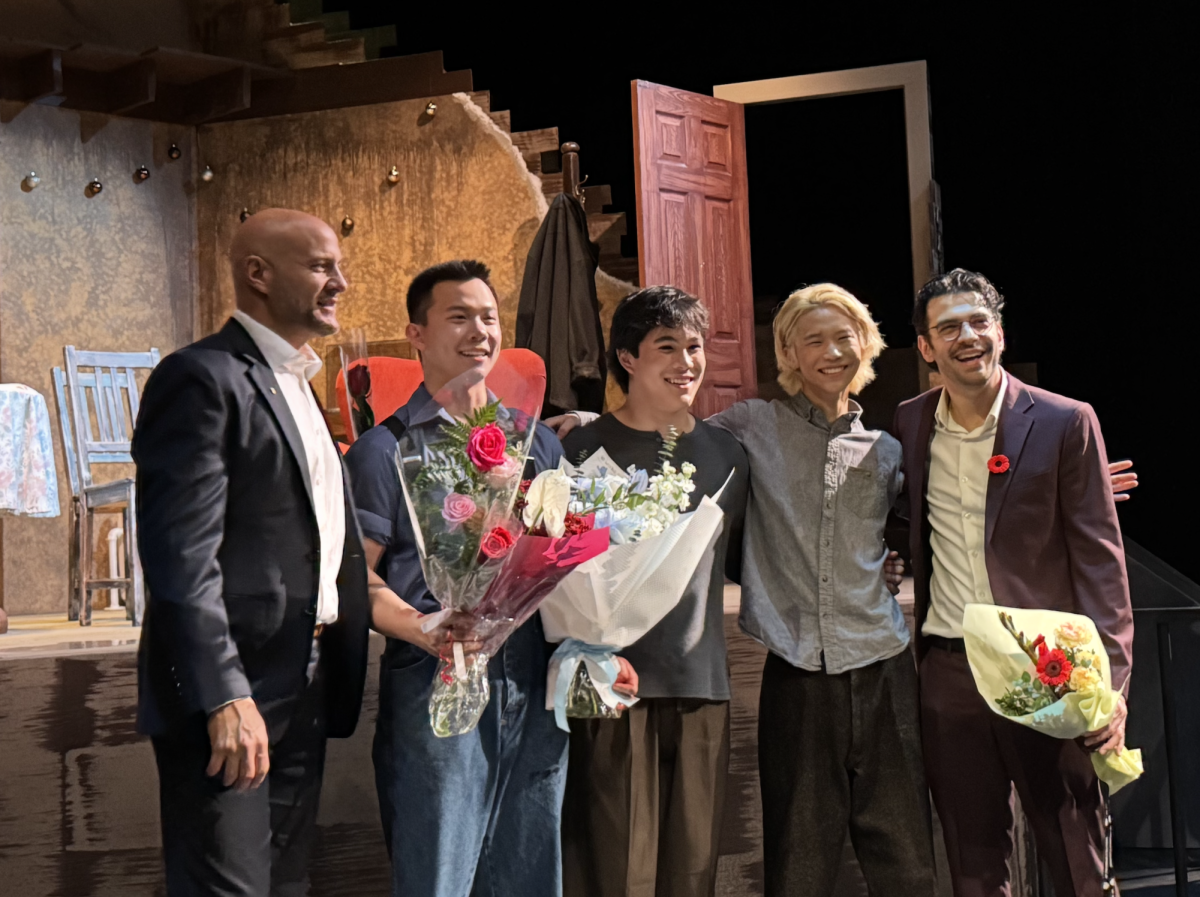
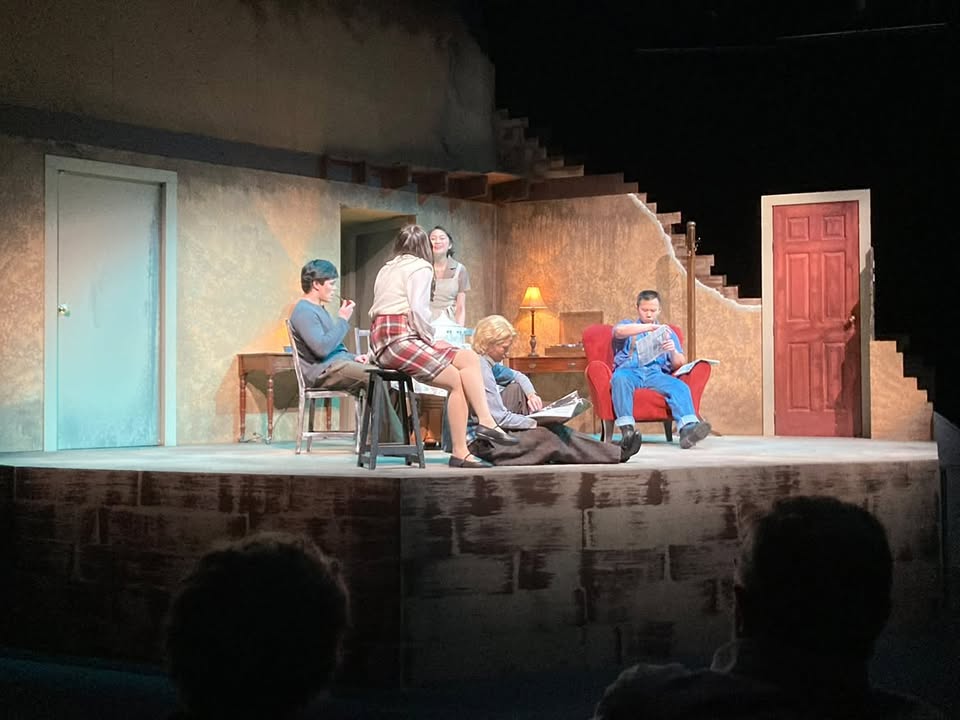
From November 4 to 7, the Saints Players Theatre Company staged Arthur Miller’s A View from the Bridge at the Senior Campus. Over four nights, a student cast, crew and live pit band brought a 1950s Brooklyn tragedy to the St. George’s stage.
This production was also a joint venture between schools. Other cast members were from St. George’s partner sister schools and rehearsed with the Saints students for weeks leading up to opening night.
Ticket prices started at $25. On Thursday, November 5th, the performance was sold out and called the Talkback Night. There was a panel discussion that night with the cast, crew, and creative team that was moderated by Ms. Kait Weston, Deputy Head of School, where audience members could ask questions about the production.
The play
The plot centres around Eddie Carbone, a longshoreman who resides with his wife Beatrice and their orphaned niece Catherine in an Italian neighbourhood adjacent to the Brooklyn docks. When Beatrice’s cousins Marco and Rodolpho come to America from Italy illegally, they take the two in. Catherine and Rodolpho fall in love, and Eddie’s mistrust of Rodolpho escalates into an obsession that results in betrayal.
Miller wrote the play as a modern Greek tragedy. The lawyer Alfieri narrates and tells the audience early on that the story will not end well. Its themes of jealousy, betrayal, masculinity and the American Dream make it heavy material for a student cast, and the school recommended the show for audiences 12 and older.
On stage
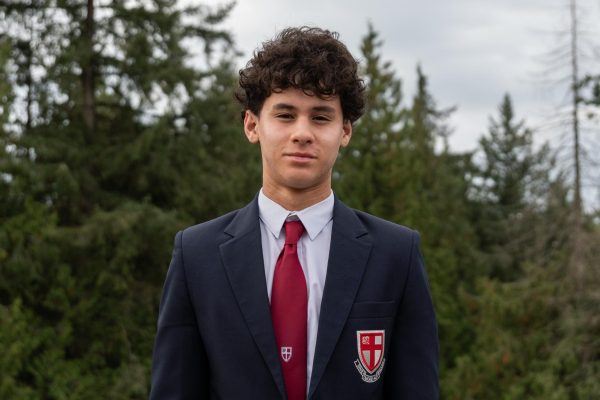
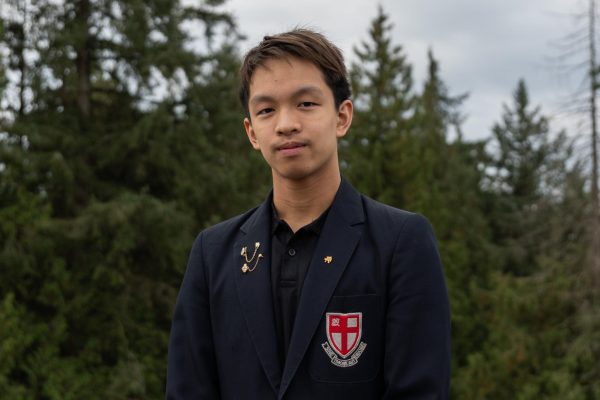
One of the cast’s key players was Nathan Dai ’27, who played Rodolpho, Beatrice’s young, carefree cousin from Italy. His charm wins over Catherine, but it also makes him the target of Eddie’s suspicion and mockery.
Dai’s talents have made a long-standing impact on the St. George’s theatre program, starting back in the Junior School. He has also helped out with Crofton House’s productions in the past. Asked how this run went, he kept it simple. “It went fine,” Dai said.
In the pit
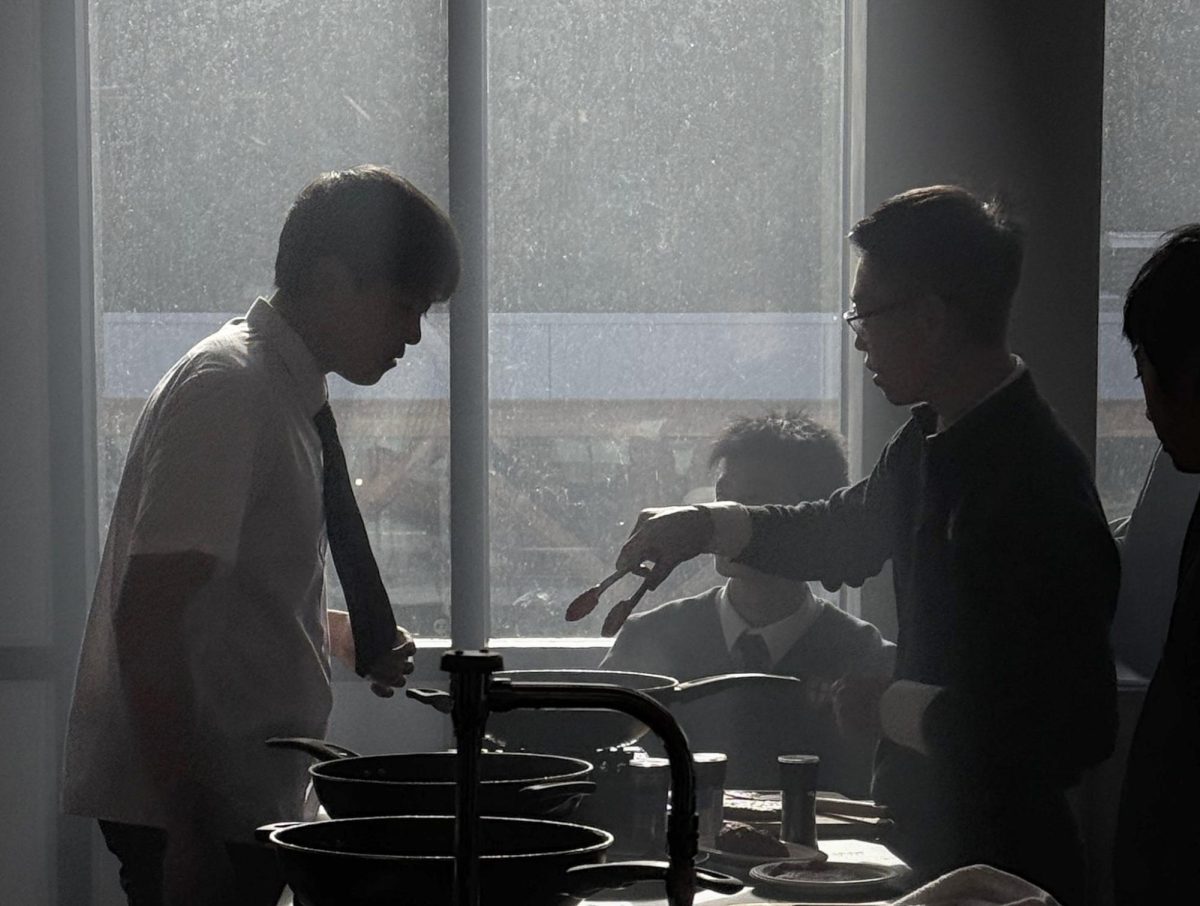
Watch SGS Echo’s exclusive interview with pit band member Frank Feng ’27 below. Stay to the end for a 30-second snippet of the trio playing one of their jazz pieces from the show.
A View from the Bridge is not a musical, so instead of a full pit orchestra, the music came from a small jazz trio set up in a tight corner beside the stage. Frank Feng ’27 played drums and doubled on alto saxophone, with Nicholas Xu ’27 on bass and Bradley Lim ’30 on piano.
Feng switched instruments to match the mood of each piece. For the quieter, sadder tunes that needed a strong melody, such as John Coltrane’s “Naima,” he played saxophone. “For some of the faster tunes, the happier ones, we kind of need the rhythm going, so I switch to drums and drop my sax at that point,” Feng said.
The cramped corner turned out to help. “As a jazz trio, we listen to each other, and the interactions between us three are really important,” Feng said. “I think this compact space made that even better.”
Being close together also made it easier to take cues from the crew. “When the lighting crew wants us to cut early, they can tell me through the comms, so I can easily signal Nicholas on bass and Bradley on piano to stop,” Feng said.
We spoke with Feng before the show on opening night. “I’m feeling pretty good. The band is very ready, and communication with the crew and the cast is also really good,” he said.
For Feng, the band’s job was to support the actors, not compete with them. “I really just want the music to be a complement instead of shining,” he said. “What we can do as a band is create the mood and support what’s going on on stage.”
From the audience
Theatre is not like any other art form. This is because the narrative is told through real people standing a few metres away; thus, the audience gets to experience the work of art personally and emotionally. This production was no different.
Preston She ’27, a senior who attended, said he was on the edge of his seat. He singled out Dai’s singing solo and Sean Lan’s acting, and he noticed how much the band added. He said, “There were 6 major acting characters in the play, but the live musicians almost became the 7th character.”
Preston also knew many of the actors personally, which made seeing them in character an eerie experience. As he put it, “My friends taking on these personas was both frightening and really cool.”
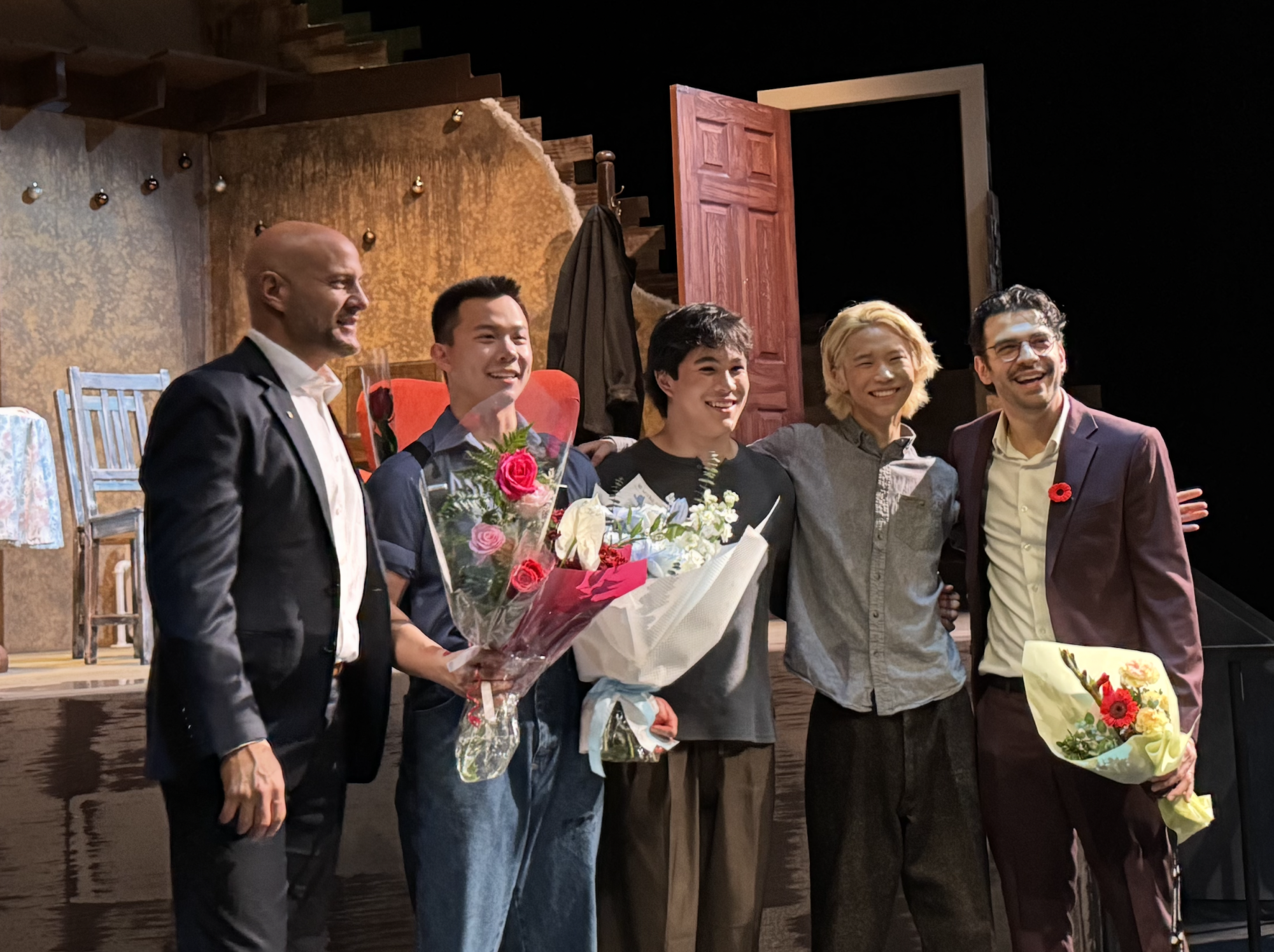
When we talked with some of the performers after the play, they made it clear that none of them live in their roles. Still, building a character takes a lot of research, and it took them several weeks leading up to the shows.
After four performances, the set has come down, and the Saints Players have closed a demanding production. For the cast, crew and band, the run ended the way Miller’s play does: the lights go down, but the story stays with you long after you leave the theatre.