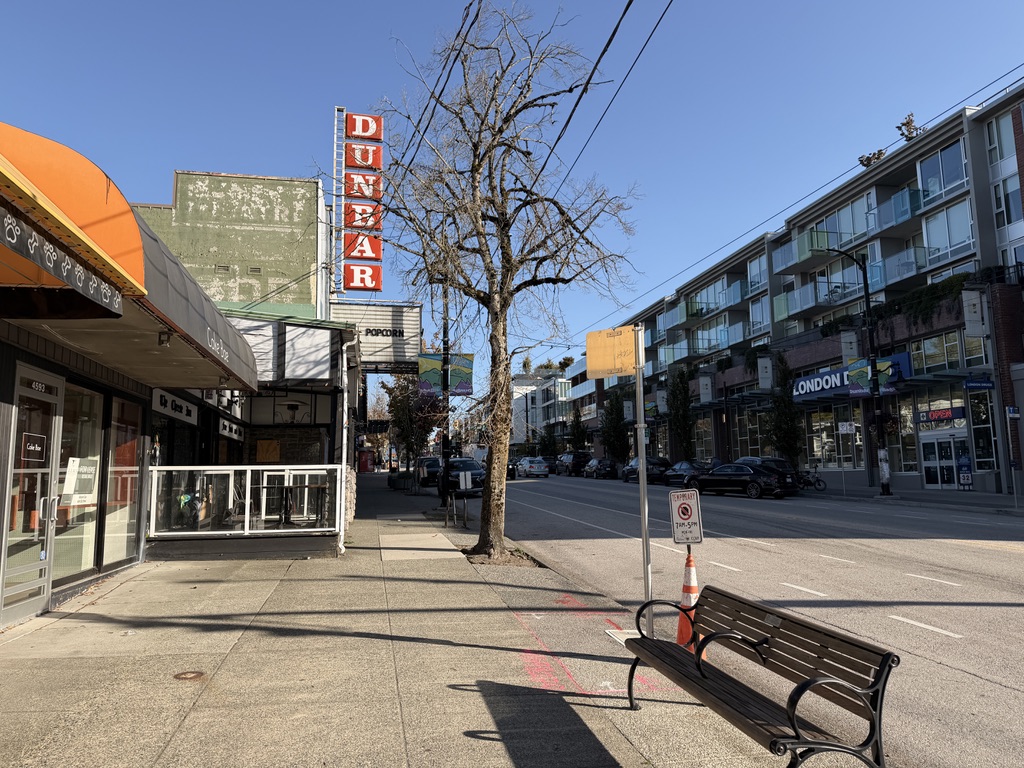
Homelessness remains a visible and persistent issue in Vancouver, particularly in the Downtown Eastside, where thousands of people face barriers to finding and maintaining stable housing. Despite the neighbourhood’s proximity to many of the city’s schools, businesses, and residential communities, the experiences of people living on its streets can remain largely unfamiliar to those who pass through the city each day. Through conversations with Ashley and Matthew, two people experiencing homelessness in Vancouver, their stories offer a closer look at the circumstances, setbacks, and aspirations that often go unseen.
A Decade of Waiting
For nearly 10 years, Ashley has been trying to find stable housing. In that time, she says, she has received a callback from a housing waitlist only once.
“The quicker you can get into a place, the better,” she said. “I think that’s the number one most debilitating thing.”
Without a permanent home, Ashley’s days revolve around meeting basic needs. She wakes up on the street or in a shelter, and panhandles to earn enough money for food. Shelters offer some relief, including showers, laundry, and meals, but Ashley says those services cannot replace the security of having somewhere to live.
Ashley’s search for housing began after a series of personal losses. Nearly a decade ago, her boyfriend died. She remained in the apartment they had shared for about four months before moving in with roommates. That arrangement eventually deteriorated, and the tenants were evicted.
Since then, she has struggled to find a permanent place to live.
She receives just over $1,000 a month in government assistance, which helps cover basic expenses and can contribute toward rent when she has housing. She also accesses shelters and hostels for meals, laundry, and showers.
Ashley recognizes the value of these services. Her frustration is that assistance with immediate needs does not bring her closer to having a permanent home.
The uncertainty affects more than where she sleeps. Ashley said she wants to work and has held several jobs in the past. She describes herself as a hardworking employee, but finding work has become difficult. Some members of her family can find employment through connections in construction and other trades. Ashley says she does not have the same access to those networks.
“I have, like, drug connections, right?” she said. “I don’t have job connections.”
This distinction captures the reason why simply telling someone to get a job doesn’t help. Finding work often depends on relationships and opportunities, while maintaining employment can be harder without stable housing.
She also described the dangers of life on the street, including violence and the difficulty of knowing whom to trust. In those circumstances, she said, people may be reluctant to speak openly about what they witness because doing so can put them at risk. Still, Ashely pushed back against the assumption that people experiencing homelessness are indifferent to others.
“If someone were to get hit by a car, I’d help them out, no matter who they were,” she said.
Recovery is Not the End of the Struggle
Matthew’s experience highlights a different difficulty: even when someone finds a route toward recovery and housing, maintaining that progress can be precarious.
He had completed addiction treatment and moved into second-stage housing, a period he remembers as one in which he was doing well. But after a series of difficult events, he began drinking again rather than reaching out for support. Within days, he had lost his housing and returned to the street.
“I’ve only been relapsed for six days,” he said. “Five or six days before that, I was doing great.”
The speed of that reversal left him questioning whether trying again was worthwhile.
“I try and try and it just always ends up back here,” he said.
Matthew described being robbed shortly before the interview. After agreeing to smoke with people he had met, he said, he woke up on a sidewalk in heavy rain, without his shirt, shoes, phone, or his ID. He was left without items he needed to navigate daily life. He also explained that replacing his identification could take a long time because of the documents and signatures required. His transit pass had been stolen as well.
These losses may seem small compared with the loss of a home, but they can make accessing help more difficult. Identification can be needed to complete administrative processes, while transportation can determine whether someone can reach services in the first place.
Matthew had heard that support was available in Vancouver, including in the Downtown Eastside, but said he did not know exactly where to find it. He had been told that a resource booklet might be available through a local service, but getting there was another obstacle.
Matthew’s account shows why homelessness cannot always be understood as a linear progression of recovery. Treatment, housing, and other support can help someone regain stability, but setbacks may still occur.
More Than a Place to Sleep
Life on the street can mean living with the constant possibility of violence. Ashley describes seeing people assaulted and killed on a regular basis. Her account highlights a dimension of homelessness that goes beyond the absence of shelter: the difficulty of feeling safe in the place where one lives. Without a secure home, even the ordinary expectation of being able to rest without fear can become uncertain.
Matthew described another threat to a person’s sense of security: the way strangers treat him. He described being insulted by strangers who pass him on the street, hearing them call him a “loser” and treating him with contempt.
“I don’t think anybody’s better than anybody else,” he said. “Everybody’s a human being. Everybody’s somebody. And they deserve at least a little bit of dignity.”
That dignity can be difficult to hold on to when homelessness becomes something others use to define a person. Matthew described feeling worthless after returning to drinking and losing his housing, questioning whether he was wasting government resources by going back to treatment. His struggle was not only to recover, but also to make sense of repeated
Ashley, meanwhile, pushed back against the assumption that people experiencing homelessness are indifferent to others. When asked about the people around her, she acknowledged that trust can be difficult on the street, but emphasized that she would still help someone in need.
“If someone were to get hit by a car, I’d help them out, no matter who they were,” she said.
The circumstances of a person’s life can become the first—and sometimes only—thing others notice about them. But Ashley and Matthew’s stories reveal people whose lives extend far beyond their homelessness. Ashley spoke about how much she enjoys working, not simply as a way to earn money, but as something she takes pride in. Matthew, who once worked in outreach, still wants to help others despite the difficulties he is facing himself. Neither has lost their ambitions or their concern for the people around them. They are not defined only by what they lack, but also by what they hope to do, what they value, and what they still have to offer.
For students at St. George’s, these experiences are not happening in some distant or unfamiliar part of the world. The Downtown Eastside is only a short distance from our school, yet the realities of homelessness can feel surprisingly removed from our everyday lives. We pass through Vancouver’s streets, encounter people experiencing homelessness, and often continue with our days without considering the circumstances behind what we see. Ashley and Matthew’s stories are a reminder that the issue exists much closer to home than we might recognize, and that understanding it begins with looking beyond the circumstances we notice at first glance.