

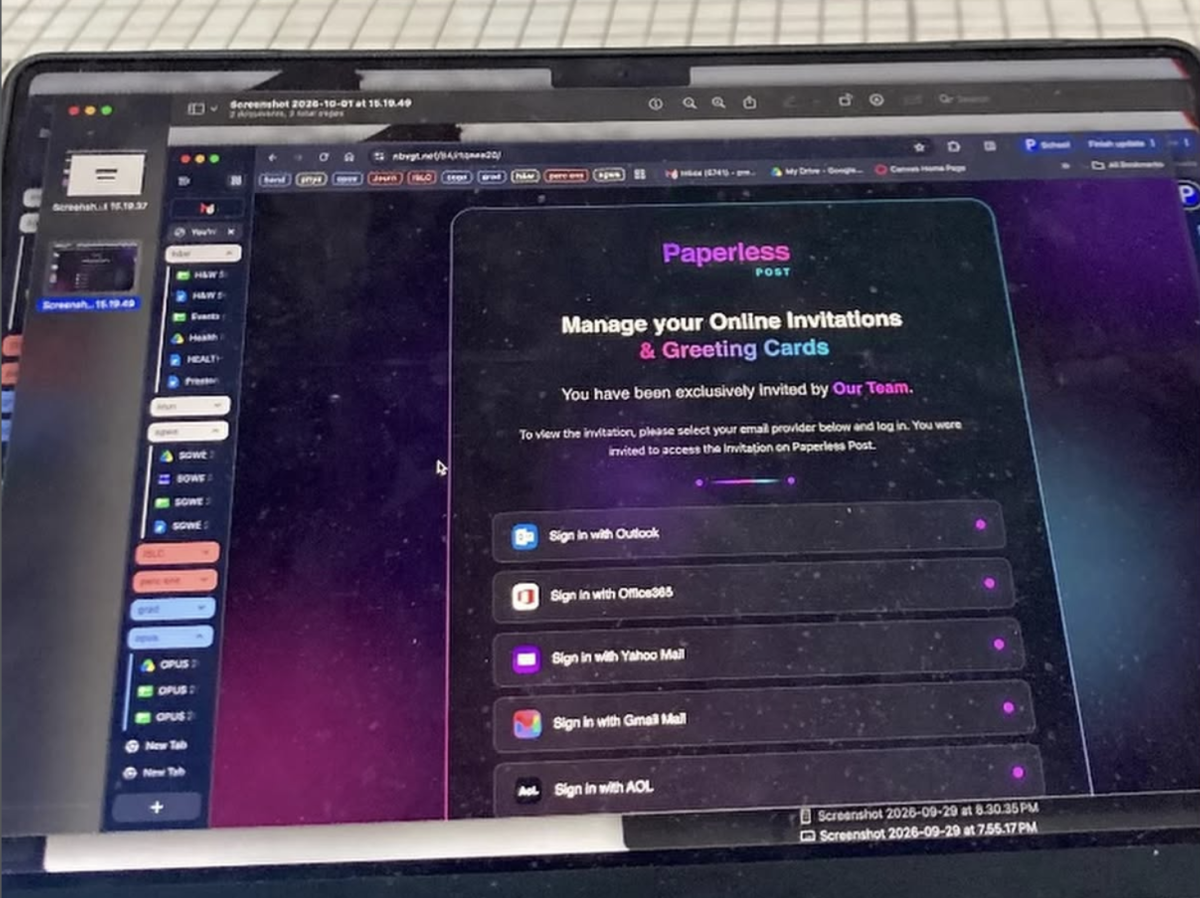
Members of the St. George’s community are aghast after suffering a decisive defeat Thursday afternoon upon encountering what many experts are calling cybersecurity’s newest and most sophisticated adversary yet: a pretty-looking webpage.
The breach reportedly began through an “exclusive” online invitation disguised as a phishing email that was sent to a St. George’s Senior School admissions officer. The link opened a campy, AI-generated webpage complete with a dark background, nice colour accents, sophisticated fonts, and several reassuringly rounded buttons, all inviting users to enter their confidential email login credentials to access an “Online Invitation & Greeting Cards” manager.
“A big red warning popped up on my screen saying the site may be malicious and might steal my information,” recounted one victim in Grade 11. “That did seem a little suspicious in retrospect.”
Within minutes of entering login details, the attackers hijacked victims’ school-sanctioned email accounts and began sending out the same phishing links to students and staff across the Senior and Junior Schools, demonstrating the remarkable efficiency of this unprecedented digital intrusion technique.
For many other victims, the fact that this email originated from someone within the organization led to the clear-cut decision to click on the link and give away their credentials without hesitation. This decision allowed the phishing operation to rapidly expand through the Saints community. The webpage even generously provided login options for Outlook, Office 365, Yahoo Mail, and AOL, ensuring that even people who had not updated their email provider since the Reagan administration could participate in the breach.
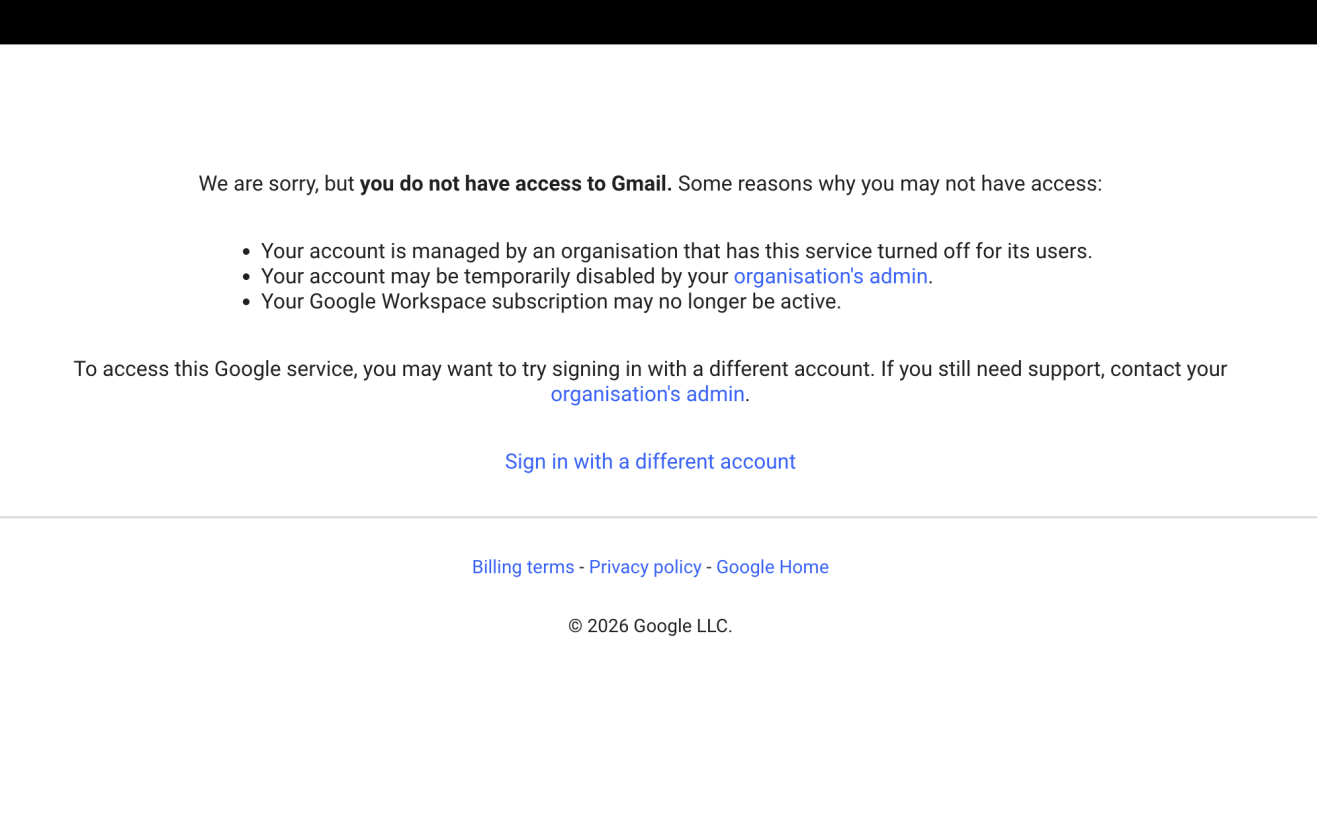
School Information Technology staff were reportedly alerted to the digital break-in after multiple reports were submitted by the slightly more cyber-literate students and staff. The IT department exhausted considerable technological resources throughout the night to subdue the malignant threat, leading to students and staff being unable to log in to critical digital infrastructure such as Canvas and Google Drive.
This unprecedented cyberattack technique is being dubbed by experts the “Asking For Someone’s Password” technique.
“This is extremely advanced social engineering,” explained a cybersecurity specialist from the St. George’s Information Technology team. “First, they ask for your password. Then, they log in to your account. You simply don’t see cyberattacks of this sophistication on an everyday basis.”
Investigators examining the phishing page later identified several subtle warning signs previously overlooked, including an ominous URL, a vague invitation from “Our Team,” and outdated logos for the various suggested email providers.
Experts now hypothesize that the webpage’s rounded corners may have been the main weapon the attackers used to neutralize warning signs.
“Once you see rounded corners, years of digital literacy training instantly become obsolete,” said a cybersecurity expert from the Canadian Centre for Cyber Security. “Hell, add a nice purple glow around the text and I’ll throw in my Social Insurance Number too.”
This incident has renewed discussions surrounding cybersecurity awareness and the importance of checking links before entering sensitive information. An emergency school-wide assembly has been called for the following Monday, where school officials are rumoured to introduce new protective measures, including placing a physical Post-it note on all student and staff laptops reading “DO NOT GIVE RANDOM WEBSITES YOUR PASSWORDS PLS.”